A worn asphalt driveway does not automatically need to be replaced. The right solution depends on whether the damage is isolated, whether the base remains stable, and whether water is contributing to the problem. Repair and resurfacing both have a place, but each works best under different conditions.
Use repair for localized damage
Targeted asphalt repair is often the practical choice when most of the driveway is sound and the problem is limited to a few areas. Small potholes, broken edges, cracks, and localized settlement can often be addressed before moisture reaches more of the base. The repair should deal with the cause, not only smooth over the visible surface.
What a durable patch involves
A lasting patch usually begins with removing loose or failed pavement. The area beneath it is evaluated, weak material is addressed where needed, and new asphalt is installed and compacted. Simply filling a deep void without correcting soft support or trapped water can allow the same failure to return.
When crack treatment may help
Narrow, stable cracks can sometimes be cleaned and filled to reduce water intrusion. Crack filling is maintenance, not a solution for pavement that is crumbling or moving. If cracks are branching, widening, or accompanied by depressions, the driveway deserves a closer inspection.
Consider resurfacing for broad surface wear
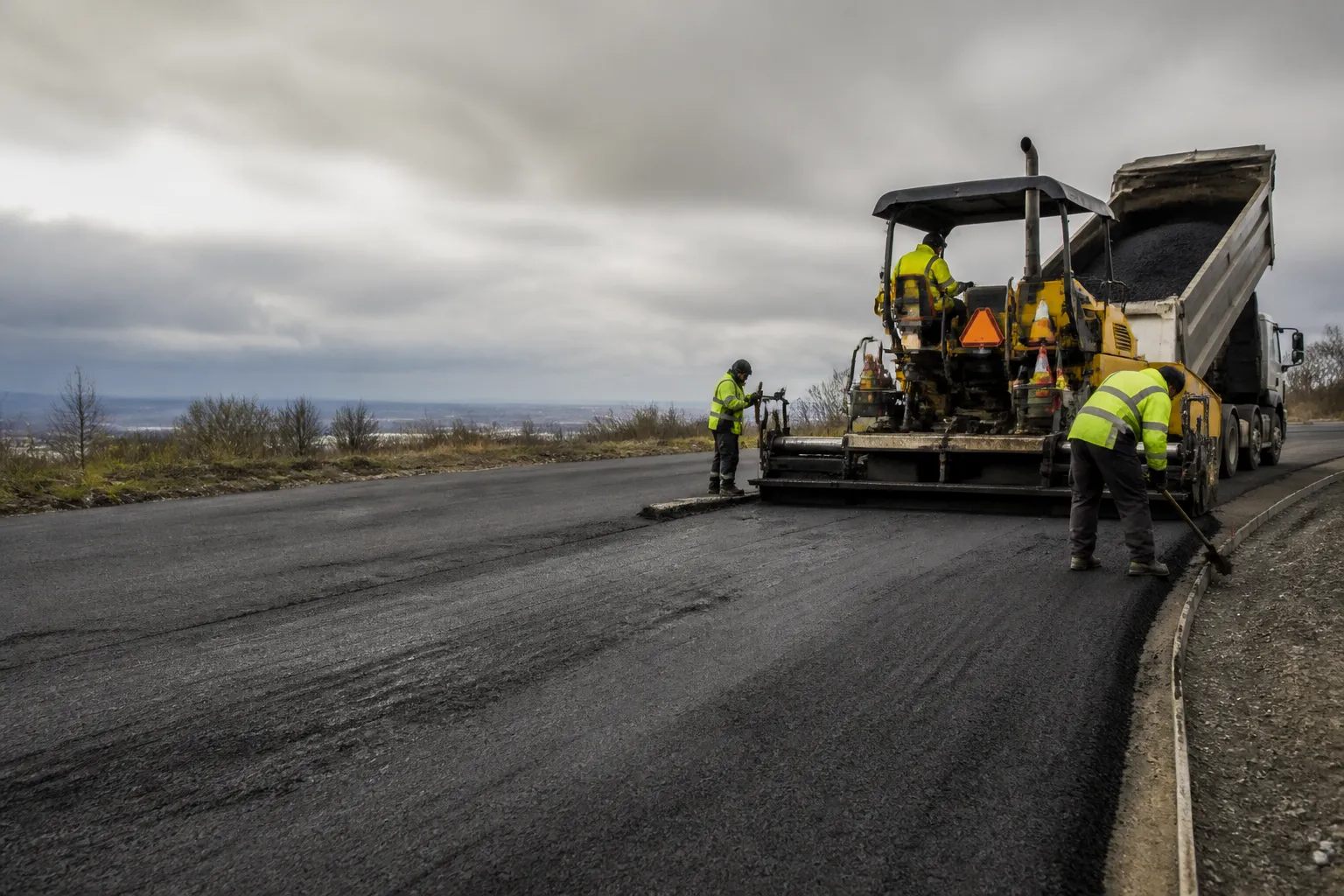
Resurfacing places a new asphalt layer over a prepared driveway. It can improve a faded, weathered, or lightly cracked surface when the foundation remains sound. Before an overlay, damaged spots should be repaired and drainage should be checked. The new layer needs a stable surface to perform well.
Signs an overlay may fit
Broad oxidation, a rough texture, minor surface cracking, and an uneven appearance can point toward resurfacing if the driveway does not have widespread base failure. The contractor should review edges, transitions near the garage, low spots, and the thickness that can be added without creating access problems.
Know when neither option is enough
Deep depressions, recurring puddles, extensive alligator cracking, and soft areas often indicate a deeper issue. If water is moving beneath the driveway or the base is failing across a large area, reconstruction may provide a more practical solution than repeated repairs or a new surface layer.
Cost basics
Angi lists asphalt driveway repairs at $1,071 to $4,011, and a new asphalt driveway at $5,248 on average. For resurfacing, a new layer should be at least 2 inches thick over a driveway in fairly good shape, per Angi. Sealing afterward averages $575 nationally, per Angi.
A quick self-check
- Are the problems in a few spots, or across the whole drive?
- Do any areas flex or sink when you drive on them?
- Does water sit on the surface after rain?
- Is the drive more than a few years past its last seal?
Spot problems point to repair. Wide wear on a solid base points to resurfacing. Soft or sinking areas point to base work.
Can I resurface over cracks?
Small cracks should be sealed first. Cracks caused by base movement will come back through a new layer.
Timing your project
Paving and resurfacing need dry weather and mild to warm temperatures so the asphalt can be placed and compacted well. In the Tri-Cities, that usually means late spring through early fall. Small crack repairs can happen in a wider window. If you are planning a resurfacing job, schedule it early in the season so the new layer can be sealed before winter.
Make a condition-based decision
Look at the full driveway after rain and note where damage repeats. Then discuss the findings with a professional. Asphalt repair may be right for defined failures, while resurfacing can renew a stable but worn surface. Request an estimate for a Kennewick driveway recommendation.
Keep reading: see patching vs resurfacing and asphalt driveway costs in Kennewick. For hands-on help, visit our driveway repair and asphalt resurfacing pages.