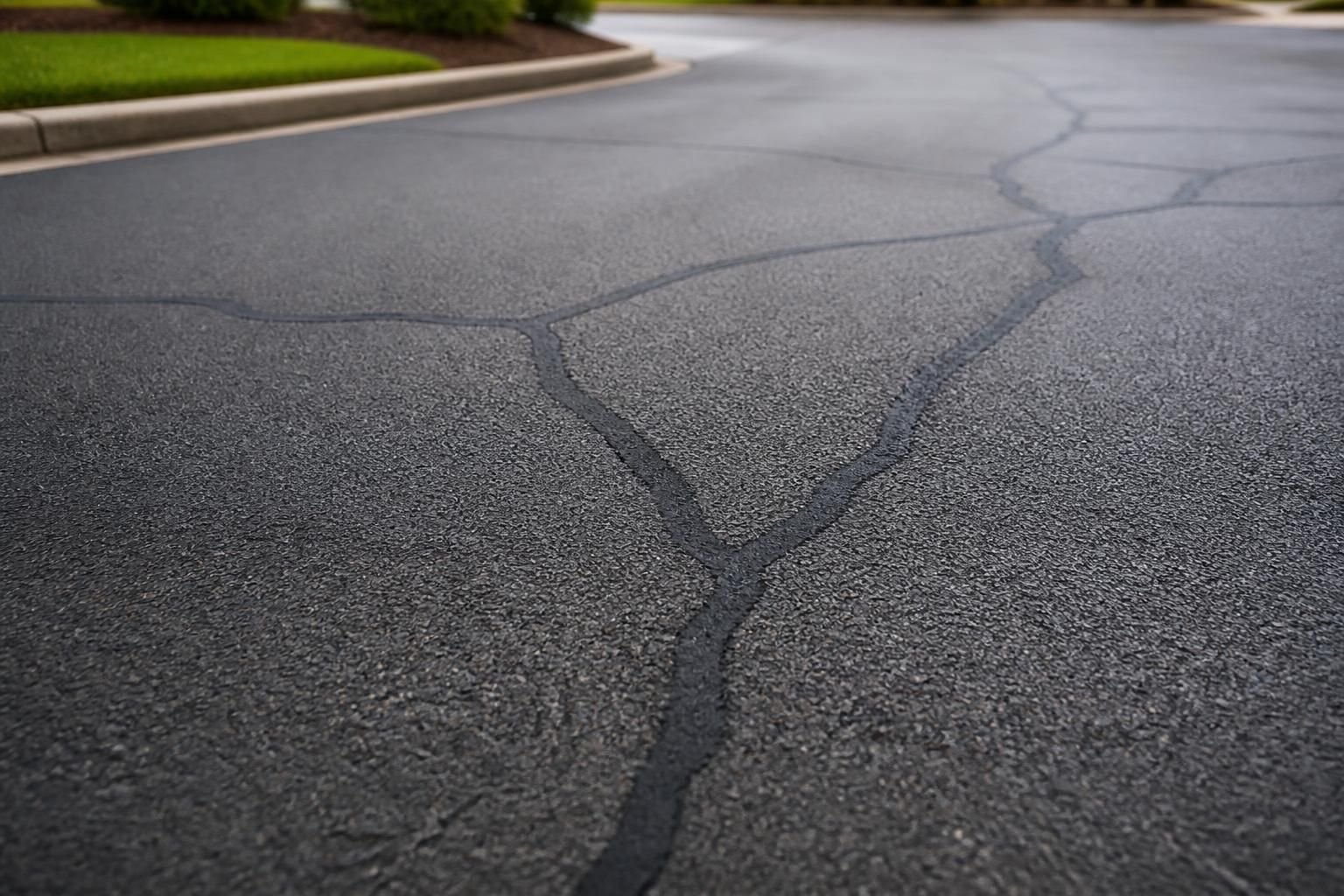
Kennewick Asphalt Paving provides Crack Filling in Kennewick, WA for property owners in Kennewick, WA and the Tri-Cities.
Crack filling is a preventative asphalt service designed for pavement that is still largely stable but has open cracks that can admit water and debris. It is not intended to rebuild a pothole or hide widespread structural failure. Its purpose is to close appropriate cracks before they become the starting point for more extensive damage.
Kennewick Asphalt Paving provides crack filling in Kennewick, WA for driveways, parking lots, private access areas, and other asphalt surfaces. We assess the crack pattern and surrounding pavement so customers can understand whether filling is the practical next step or whether the area needs patching, resurfacing, or other repair work.
Asphalt naturally experiences weather, vehicle loads, and movement over time. Once a crack opens, water and fine material can work into the pavement. That can weaken the surface around the crack, contribute to edge breakdown, and make the original line wider or longer.
Filling suitable cracks early can be a focused way to maintain the pavement you already have. It does not promise to make older asphalt new, but it helps address a point where further deterioration often begins.
Crack filling is generally considered when the pavement on either side of the crack remains sound enough to support a repair. It is useful for early-stage cracking and for surfaces where the main concern is water entering open lines.
It may not be the right choice when the asphalt is crumbling, the crack pattern resembles a web of broken pieces, or the pavement has sunk and lost support. Those conditions can call for asphalt patching, full-depth repair, resurfacing, or another service. We explain the difference during an estimate.
The material and approach are selected for the existing crack condition and surface. Preparation is central to the work because filler needs a clean, open area to perform as intended. Filling a crack that is packed with soil or surrounded by loose, failing pavement will not resolve the condition of the asphalt around it.
For customers, the useful distinction is simple: filling is a maintenance measure for suitable cracks. It is different from a patch, which removes and rebuilds a failed section, and different from resurfacing, which renews a larger prepared surface.
Driveway cracks often form in wheel paths, near garage approaches, or at edges where the pavement meets landscaping. Filling them can help homeowners stay ahead of a small defect before it becomes a loose or broken section.
Parking lots can develop long cracks in drive aisles and near areas where vehicles turn or stop. Treating suitable cracks helps property managers preserve sound portions of the lot while planning bigger work only where it is needed.
The amount of crack filling needed depends on the number of cracks, their length and condition, access to the paved area, and whether debris or nearby failures need additional preparation. A driveway with a few defined cracks is very different from a parking lot with cracking across multiple traffic zones.
We also consider whether the work should be paired with patching, surface treatment, or striping. Those recommendations are based on the condition of the pavement, not on a generic package.
Crack filling should close suitable openings and help reduce further contamination and water entry into the pavement. The filled line will remain visible, particularly against older asphalt. The expected result is better protection for a stable surface, not an invisible repair or a substitute for rebuilding pavement that has already failed.
Open cracks in otherwise stable asphalt are often good candidates. We assess the surrounding pavement before recommending filling.
Web-like alligator cracking can indicate a deeper failure. It may require patching or another repair rather than filling alone.
Cleaning removes material that can keep filler from contacting the crack properly.
It helps address existing suitable cracks, but asphalt continues to age and should be monitored for new wear.
Yes. It is commonly used for appropriate cracks in residential asphalt driveways.
Yes. We can discuss crack filling alongside patching, sealcoating, resurfacing, or other work that fits the surface condition.
Call +15094101738 to discuss crack filling for your Kennewick property or a nearby Tri-Cities location.