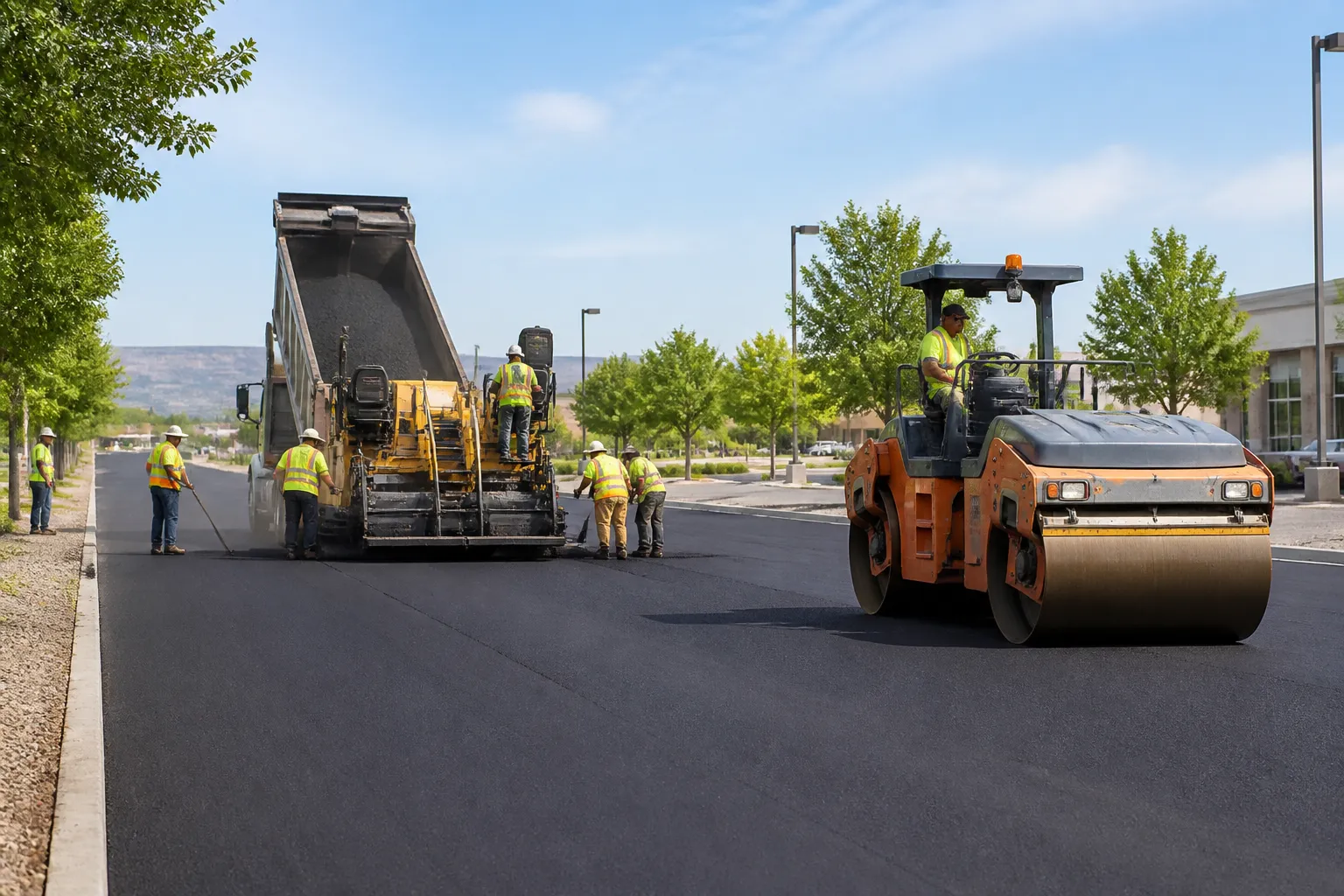
Kennewick Asphalt Paving provides Road Paving in Kennewick, WA for property owners in Kennewick, WA and the Tri-Cities.
Road paving is appropriate when a private road, development lane, agricultural access route, or commercial connection needs a durable asphalt surface built around actual traffic and site conditions. It is considered for new routes, worn roads with broad deterioration, or gravel lanes that no longer provide predictable access. The asphalt is visible at the end, but useful road performance begins with layout, drainage, and support below it.
Kennewick Asphalt Paving plans road paving for property-owned routes in Kennewick and the Tri-Cities. We look beyond road length to consider grades, entrances, turning areas, vehicle types, edge support, and how water moves across the site. This makes the recommendation more useful than treating every road as a simple strip of asphalt.
New paving can be a practical step when a gravel road produces dust, washboarding, rutting, or mud that interferes with regular access. Replacement can be stronger where asphalt has widespread cracks, repeated potholes, extensive patching, or base problems through much of the route.
Where an old road has a stable structure and only surface wear, resurfacing may be worth discussing. Where failures are isolated, roadway repair can be the more measured option. Useful scope depends on condition, not appearance alone.
A complete paving project creates an intentional driving surface with consistent support, defined travel areas, and practical transitions at gates, driveways, existing pavement, and street connections. It can reduce loose aggregate, smooth an uneven route, provide a more orderly entrance, and improve daily property travel.
It does not automatically solve every off-pavement drainage condition, unstable slope, or underground utility issue. If water has no adequate route away from the planned road, or ground conditions are weak, those concerns need to be addressed before paving starts.
Preparation begins by establishing the road footprint and reviewing existing material. A new route can require excavation, subgrade shaping, and aggregate base placement. For replacement work, deteriorated asphalt may be removed and weak areas corrected before the new surface is installed. Base and asphalt section are informed by site conditions and expected traffic, especially where trucks or equipment will use the road.
The route needs a profile that lets water move rather than linger in wheel paths or along an edge. Crowns, cross slopes, swales, and tie-ins are considered in relation to the property.
Road ends, garage approaches, gates, culverts, and existing pavement connections are high-use locations. Planned transitions limit abrupt elevation changes and thin, vulnerable asphalt at an edge.
Residential road paving can serve long driveways, shared lanes, private communities, and routes to detached garages or shops. The plan may accommodate daily cars, visitors, occasional moving trucks, and a clear street approach.
Commercial, agricultural, and industrial road paving may support employee access, equipment travel, deliveries, field approaches, and service routes. These projects can require larger vehicle turns, staged access, or routes that remain partly open. Traffic use, rather than the property label, guides the pavement plan.
Road length and width are only part of the scope. Existing material, excavation, aggregate needs, drainage corrections, haul access, utilities, bordering landscaping, and equipment staging all matter. A site visit identifies conditions not visible from an aerial image.
Expected results are a smoother, more cohesive asphalt route with defined edges and practical connections. Asphalt improves daily travel and reduces loose-surface issues common to gravel, but it follows underlying support and site drainage. Heavy loads outside the design use, standing water, and neglected cracks can shorten service life.
Kennewick properties often have wide lots, shop access, private lanes, and irrigation conditions that deserve an on-site review. We provide road paving for suitable private-property projects in Kennewick, Pasco, Richland, and nearby communities. Public-road work, permits, and right-of-way connections may involve separate jurisdiction requirements.
It can, but gravel must be evaluated and prepared as a road base. Thickness, compaction, drainage, and weak spots all matter.
Replacement is often considered for broad structural failure. If the base and old pavement are sound, resurfacing may be an alternative.
Describe cars, delivery trucks, trailers, RVs, farm equipment, and other regular loads. This helps define the needed scope.
Yes. Those areas can be included when they are part of the planned route and traffic pattern.
Water that crosses, pools on, or runs beside the route can undermine support. Surface shape and site drainage should be considered first.
Our focus is private-property roads and access routes. Public-street work can be subject to municipal contracting and permitting.