Kennewick Asphalt Paving provides Asphalt Repair in Kennewick, WA for property owners in Kennewick, WA and the Tri-Cities.
Asphalt damage is rarely just a cosmetic issue. A small break can allow water into the pavement, traffic can work loose material free, and a localized defect can become a much larger failed area. Asphalt repair is the service used to correct those failures before they affect more of a driveway, access lane, or parking area.
Kennewick Asphalt Paving helps property owners in Kennewick, WA evaluate damaged asphalt and select a repair scope that matches the condition on the ground. We focus on what is actually failing, whether that is a loose edge, alligator cracking, a low spot, an old patch, or a section that has lost support.
Asphalt repairs are designed for isolated or developing pavement failures. The right repair restores the damaged area while protecting the sound pavement around it from continuing to unravel.
Repair is different from surface maintenance. Sealcoating may improve the appearance of sound pavement, but it does not rebuild an area that has already broken apart. The damaged material needs to be evaluated first.
Repairs are often useful when the problem is limited to defined sections and the surrounding pavement remains reasonably stable. A driveway with one pothole, a parking lot with a failed turning area, or an access lane with a broken edge may not need full reconstruction.
We also look for clues that a smaller repair may not be enough. Repeated failures across the surface, extensive cracking, or broad settlement can point to a need for resurfacing, removal, grading, or new paving. The goal is to explain the difference before work begins.
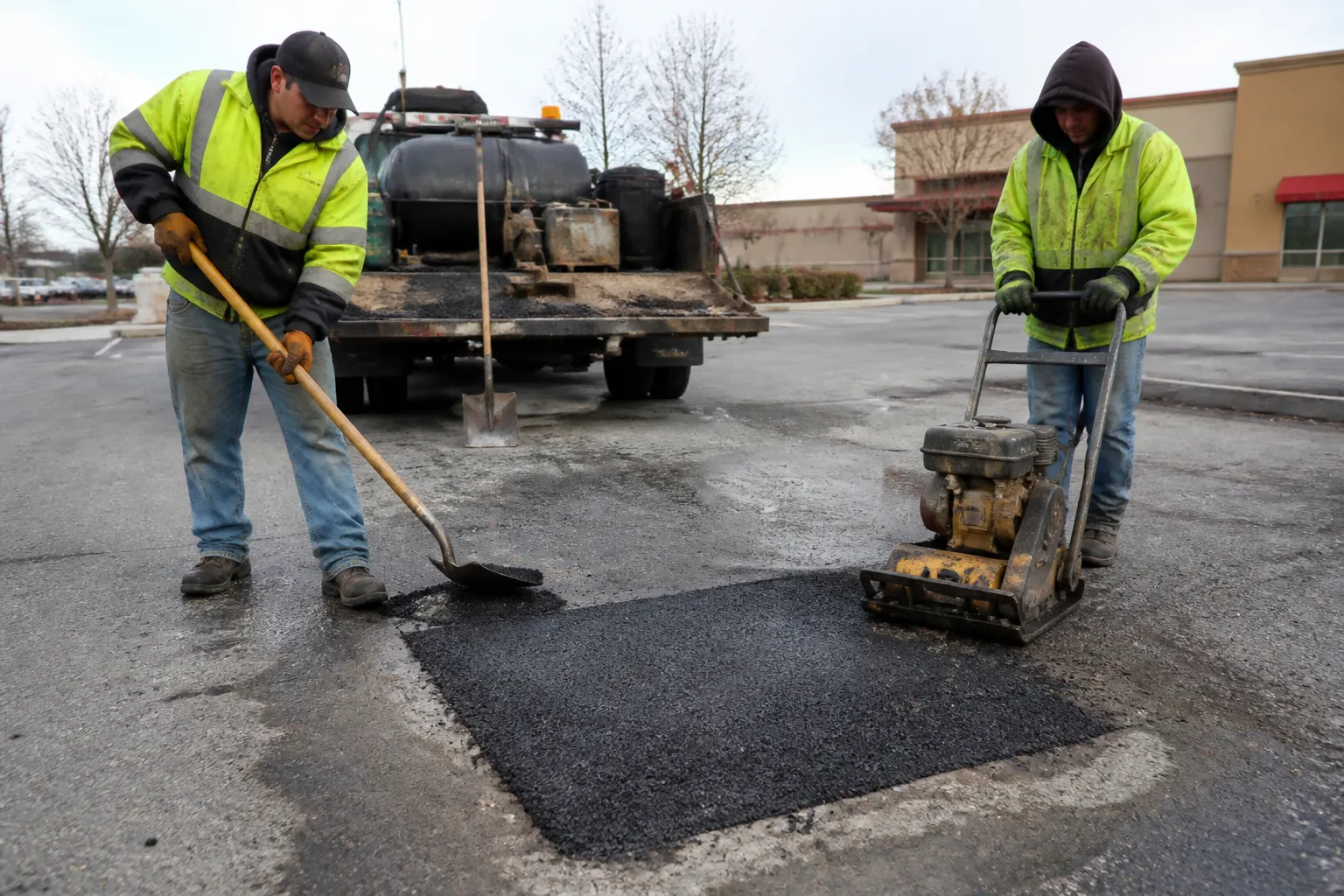
The repair method depends on the type of damage. Localized failures are commonly handled with a properly prepared asphalt patch. Cracks may be filled when the surrounding pavement is still stable. Where an old surface has reached the end of its useful life but the base remains viable, resurfacing may be discussed instead.
Compaction and edge preparation matter because a repair has to connect to existing asphalt that may be older and weathered. Removing weak material and creating a clean repair area gives the new asphalt a better foundation than a quick top-layer fill.
Homeowners often call about potholes near a garage, broken edges beside a lawn, tire-track depressions, and patches that no longer sit level. A targeted repair can make the driveway safer and more comfortable to use while helping prevent water from reaching a larger area.
Commercial properties often see concentrated wear near entrances, turns, loading points, and drainage paths. Repair work can address trip-prone or vehicle-damaging areas while allowing property managers to plan any larger pavement project around normal use of the site.
The size of the visible break is only one factor. We consider the depth of the failure, whether the base has softened, access for equipment, nearby curbs or landscaping, water movement, and how heavily the area is used. Several small repairs in different parts of a lot may also require a different plan than one isolated patch.
A completed asphalt repair should leave the affected area more stable, smoother to travel over, and less exposed to further breakdown. Fresh asphalt may initially look darker than older pavement, and the repair seam can remain visible. The priority is restoring a functional surface, not disguising a structural problem.
After repairs, keeping water from standing on pavement and addressing new cracks early can help preserve the surrounding asphalt. We can also discuss crack filling, sealcoating, striping, resurfacing, or additional patching when those services suit the condition of your property.
Often, yes. A localized pothole can usually be assessed and patched when the remaining driveway is stable.
It is a web-like crack pattern that can indicate the pavement in that section has lost support and may need a deeper repair.
They can fail when weak material was left below or around the repair, water affects the base, or traffic places stress on the seam.
New asphalt normally appears darker at first. It will weather over time, but a repair may remain visually distinct from older pavement.
We can assess visible low spots and damaged areas to determine whether asphalt repair, grading, or a broader paving approach is appropriate.
Widespread cracking, repeated patch failures, and large areas of broken pavement are signs that resurfacing or replacement should be discussed.
Call +15094101738 to discuss asphalt repair for your Kennewick property or a nearby Tri-Cities location.