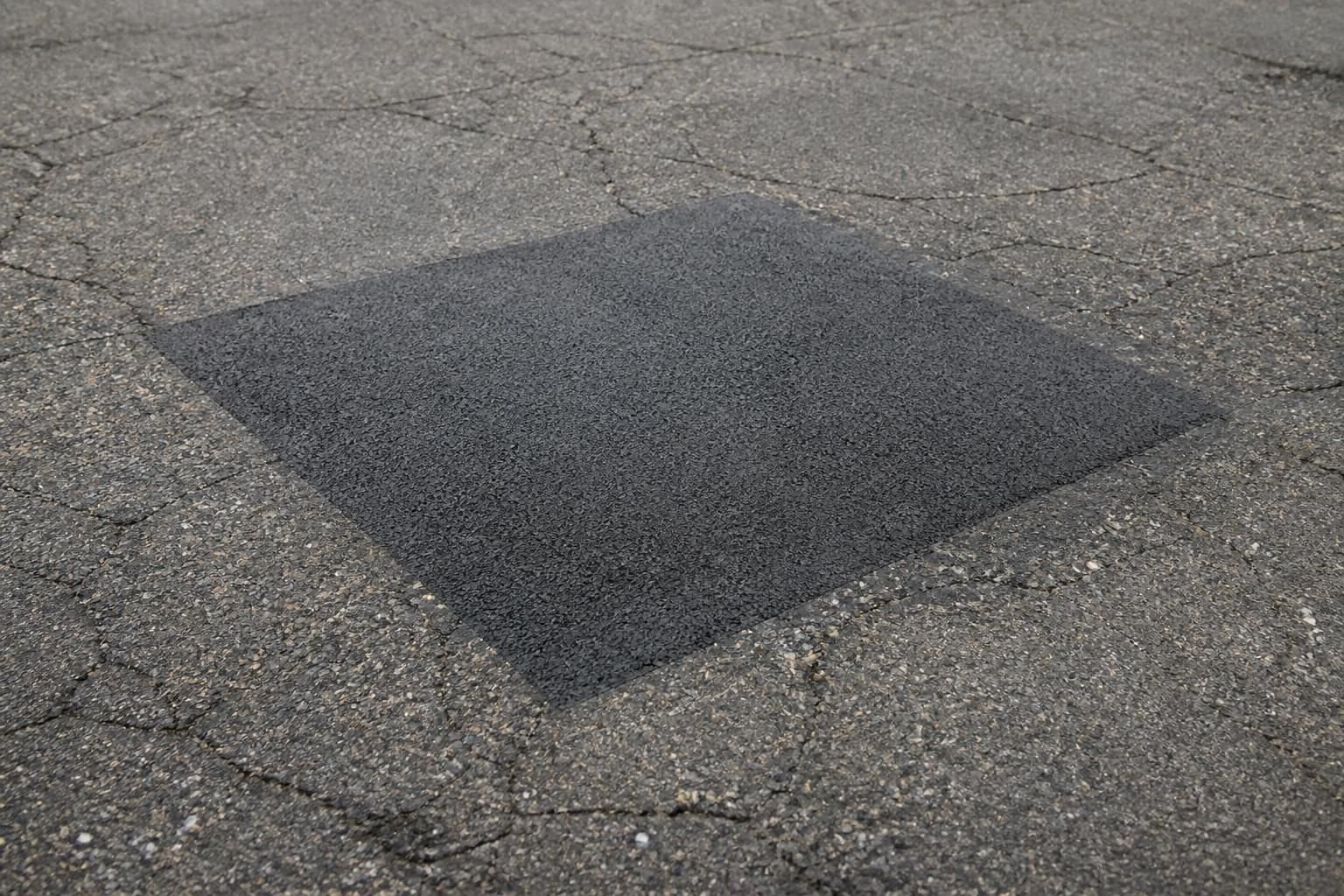
Kennewick Asphalt Paving provides Asphalt Patching in Kennewick, WA for property owners in Kennewick, WA and the Tri-Cities.
Asphalt patching is used when pavement failure is concentrated in a specific area instead of spread across an entire surface. A patch can remove a pothole, a crumbling section, a failed old repair, or a damaged traffic zone and replace it with fresh asphalt that restores a usable driving surface.
Kennewick Asphalt Paving provides asphalt patching in Kennewick, WA for driveways, parking areas, access lanes, and private roads. We focus on the limits of the failure, the reason it developed, and the preparation needed to keep the repair from becoming a short-lived cover-up.
Patching is not the same as crack filling. Crack filling treats suitable open lines in stable pavement. A patch is used when asphalt has deteriorated enough that the failed material must be removed and rebuilt.
A carefully defined patch is often a practical solution when surrounding pavement still has sound structure. It allows a customer to correct the damaged portion without replacing pavement that is still doing its job.
We also look at whether damage continues beyond the obvious area. If failures are appearing throughout a driveway or lot, a series of isolated patches may not be the most useful plan. In those cases, resurfacing, more extensive repair, or replacement may offer a more consistent result.
When pavement has broken down through more than the top surface, the repair needs to reach the affected depth. This method is commonly considered for potholes, failed areas, and sections with unstable support.
For more limited damage, a focused surface repair can restore the affected section. The existing pavement still has to be stable enough to support that approach.
Edges can break down when tires travel too close to the side, adjacent ground loses support, or water works along the boundary. A patch may rebuild the failed edge and restore a cleaner line.
At homes, patching often solves a driveway pothole, a broken garage approach, or a failed section near the street. At commercial properties, the work often focuses on high-turn locations, loading areas, drive aisles, and entrances where traffic repeatedly concentrates.
Private roads and rural access lanes may need patching where drainage patterns, utility work, or heavier vehicle use have created a localized failure. Each setting has different traffic and access considerations, which is why we inspect the actual site before recommending a scope.
The required patch area depends on more than the size of the visible hole. Depth of failure, base condition, number of damaged locations, equipment access, traffic control needs, drainage, and the condition of the adjoining asphalt all influence the work. A patch with sound edges and support is a different project from a patch where the failure continues underneath nearby pavement.
A completed patch should remove loose, broken pavement and provide a more stable surface for traffic. Fresh asphalt will often be darker than surrounding asphalt and can remain visually distinct, particularly on an older surface. That contrast is normal. The purpose of patching is to correct the failed area and slow damage from moving outward.
Watching nearby cracks, keeping water from collecting at the repair, and scheduling maintenance appropriate to the remaining pavement can help you plan future work before another section fails.
Patching rebuilds specific damaged areas. Resurfacing adds a new layer over a larger prepared surface when the underlying pavement is still suitable.
Yes. We can remove a failed patch and evaluate the pavement around it before rebuilding the area.
The repair depth depends on how far the failure extends. We assess the damaged area before selecting the method.
Yes. A patch can rebuild a failed edge when the surrounding area is prepared properly.
Entrances concentrate braking, turning, and traffic, which can place added stress on an already weakened area.
Yes. We can review multiple locations and prepare a scope that addresses the areas needing work.
Call +15094101738 for asphalt patching in Kennewick and nearby Tri-Cities communities.