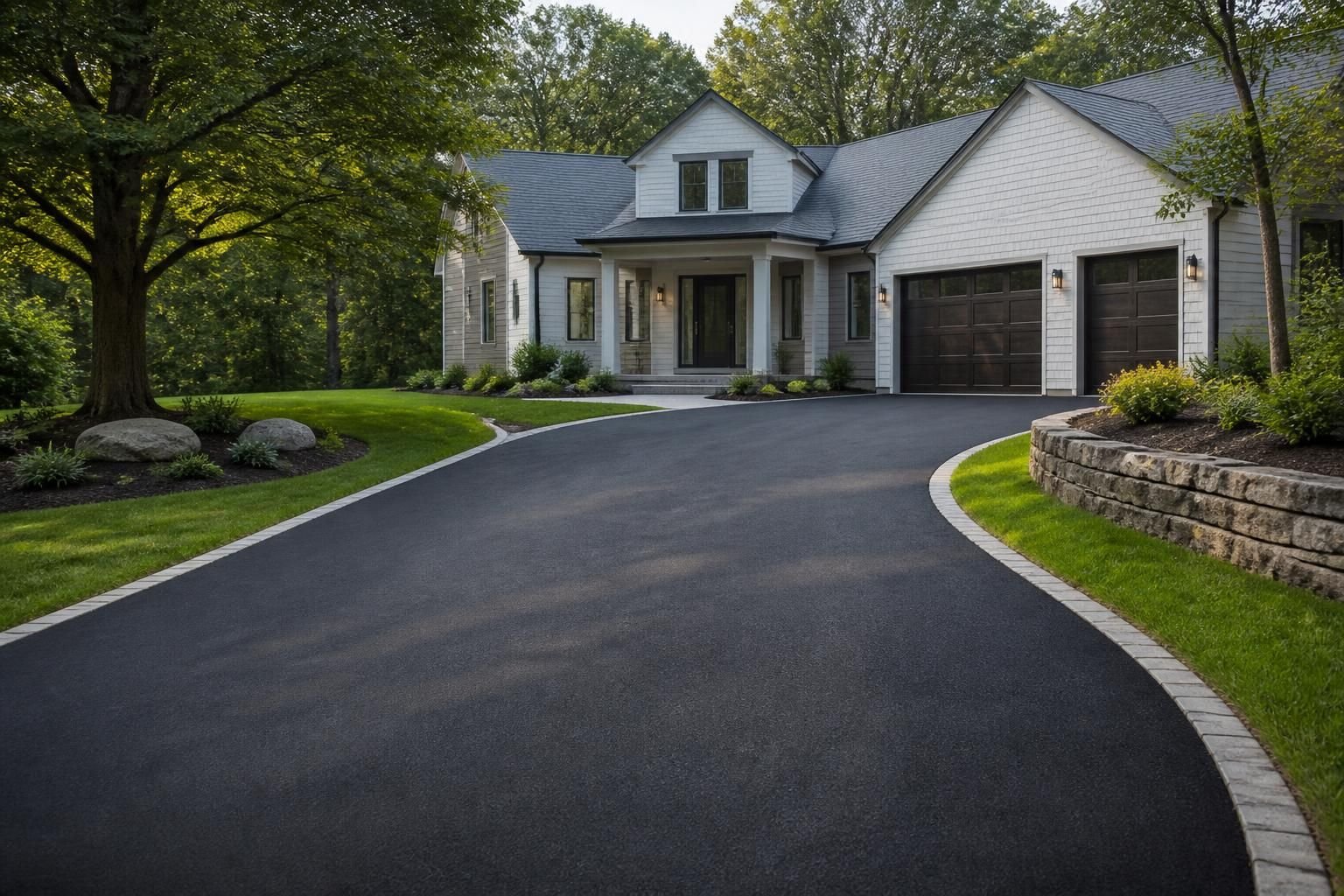
Asphalt Patching vs. Resurfacing: What’s the Difference?
Asphalt patching repairs defined failed areas. Resurfacing renews the top layer across a larger paved area. The right choice depends on whether the damage is isolated or widespread and whether the pavement base is stable.
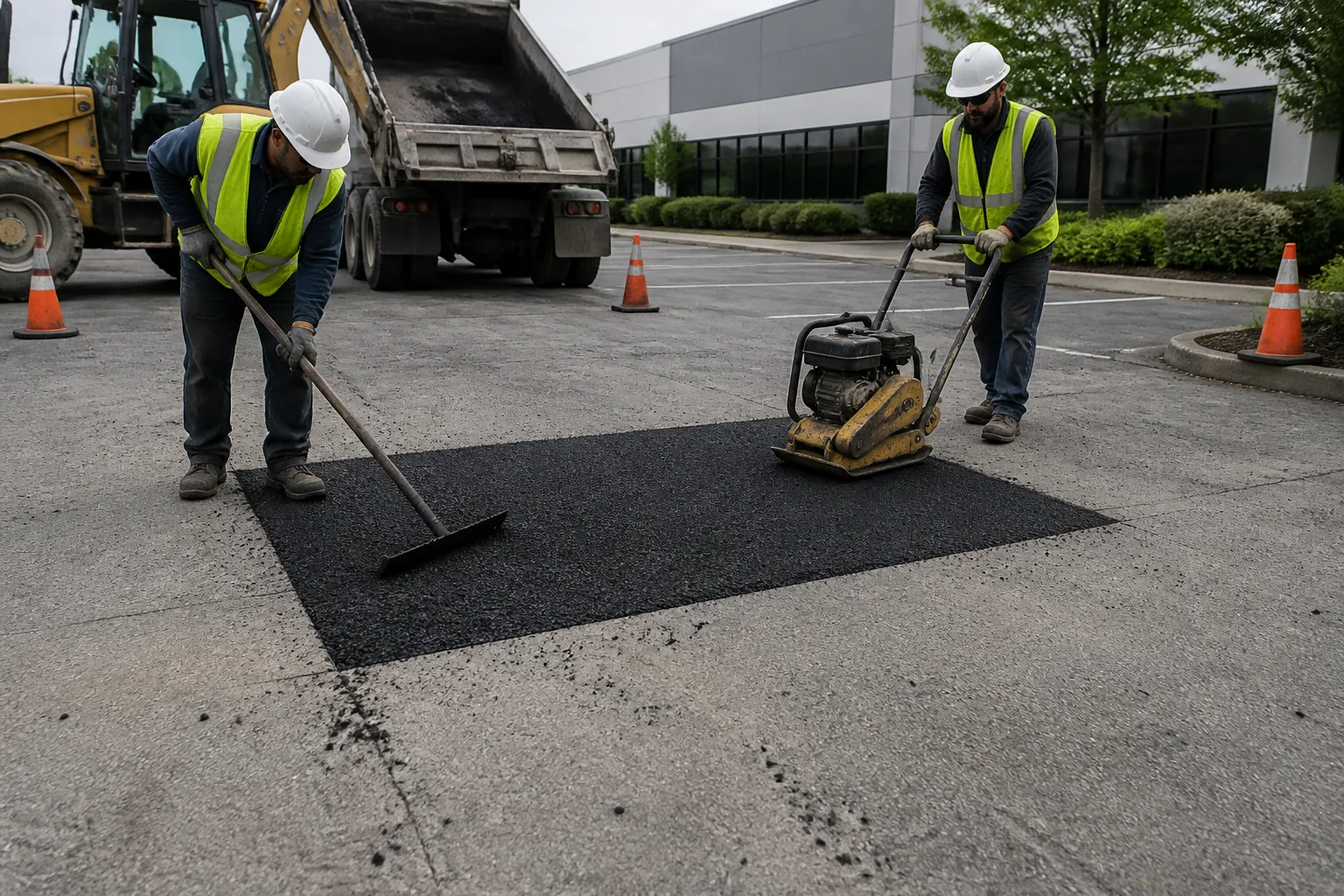
What asphalt patching does
Patching is used for potholes, broken edges, utility-cut areas, and small sections of failed pavement. A durable repair typically includes removing loose material, addressing weak base where needed, placing new asphalt, and compacting it. It is a focused solution, not a way to disguise widespread deterioration.
What resurfacing does
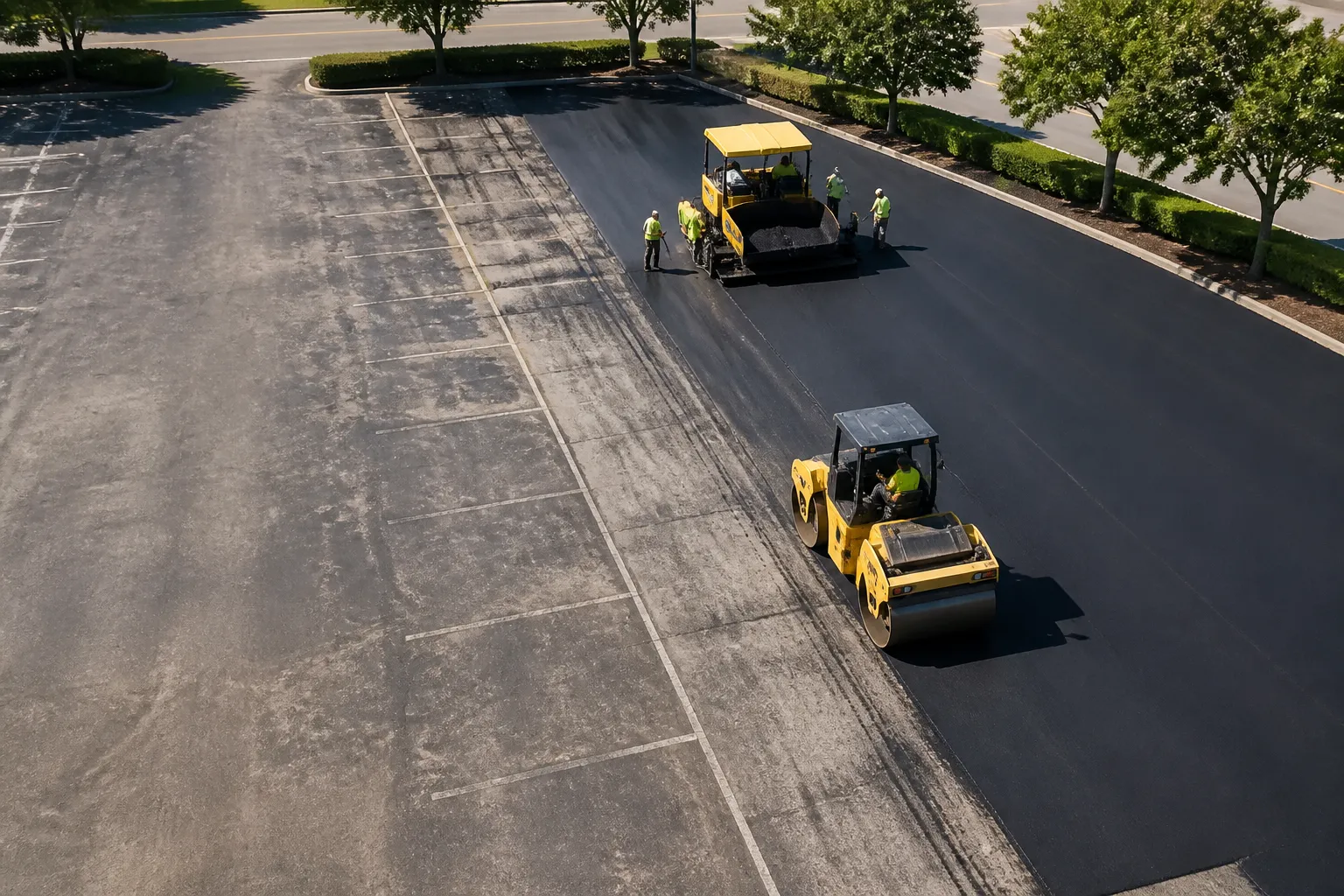
Resurfacing, sometimes called an overlay, places a new asphalt layer over an existing lot or drive after needed repairs and preparation. It is most useful when the pavement has broad surface wear but retains a stable foundation. Drainage, elevations at doors and curbs, and failed areas should be reviewed first.
How to decide
Choose patching for distinct defects surrounded by sound pavement. Consider resurfacing for overall wear with no major structural failure. If cracking, rutting, or water problems extend through much of the area, reconstruction may be more appropriate. See our asphalt patching and resurfacing services, or request an assessment.