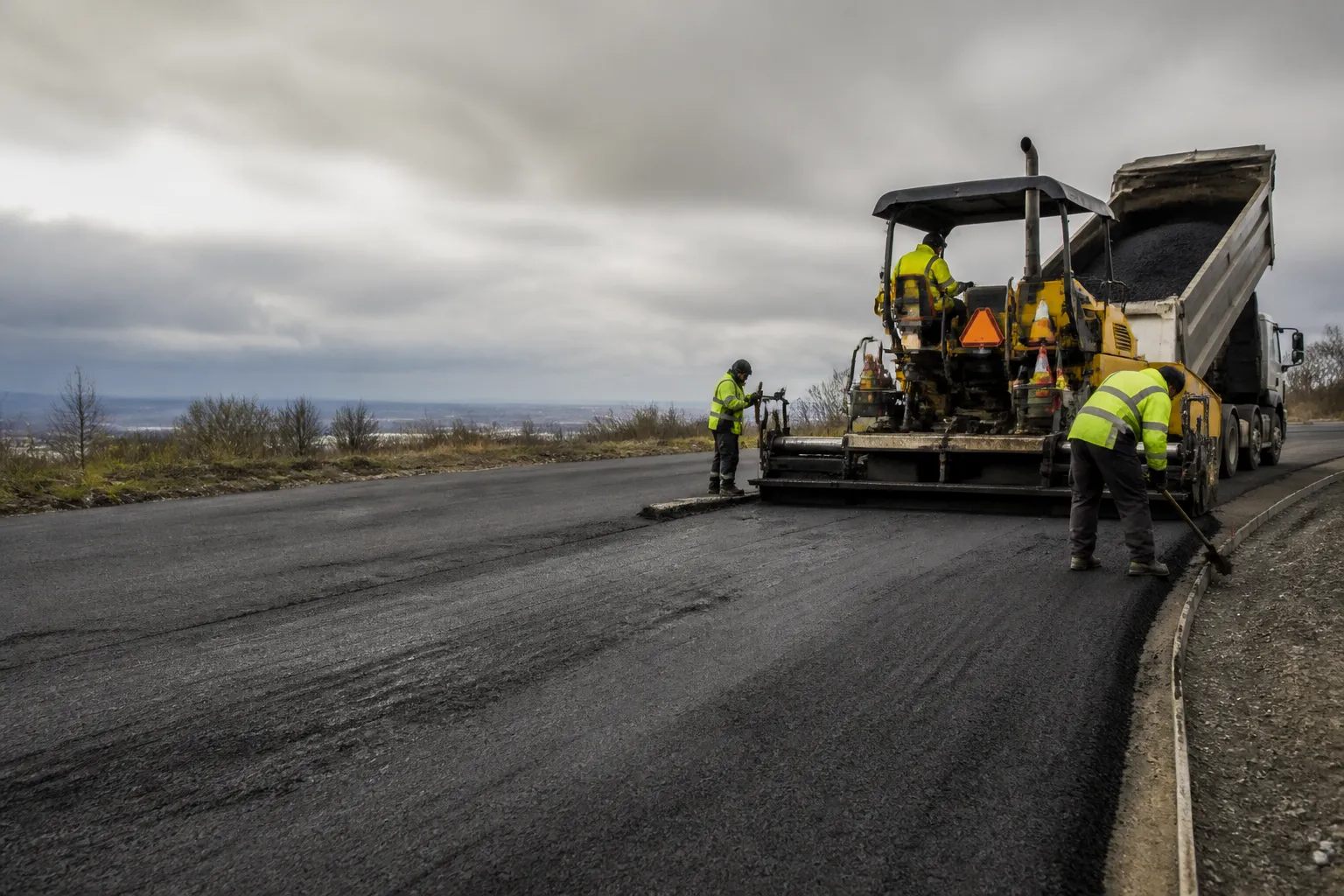
Asphalt milling and asphalt overlay work are often discussed together, but they solve different problems. An overlay adds new asphalt over a prepared pavement surface. Milling removes a controlled depth of existing asphalt first. The best approach depends on pavement condition, drainage, elevations, and the stability of the layers beneath the surface.
What an asphalt overlay does
An overlay, sometimes called resurfacing, places a new asphalt layer over an existing lot or driveway after preparation and needed repairs. It can improve ride quality, restore a worn surface, and provide a more uniform appearance. It is not a cure for every kind of pavement distress. The existing structure needs to be evaluated before new material is placed.
When an overlay may fit
An overlay can be practical when a surface has broad weathering, oxidation, or minor cracking but the base remains stable. Isolated failed areas should be repaired first. The contractor should also check drainage, utility covers, curb lines, and transitions at doors or sidewalks so the new pavement does not create a water or access problem.
What an overlay cannot fix
Deep rutting, soft spots, widespread alligator cracking, and recurring depressions can point to a base problem. Covering those symptoms with a new surface may only delay more extensive repairs. If water is entering the pavement or collecting in low areas, correcting the cause is more important than adding a cosmetic layer.
What asphalt milling does
Milling uses specialized equipment to remove part of the existing asphalt surface. The removed material can be hauled away or managed as part of the project plan. Milling creates room for new asphalt while helping preserve established elevations around curbs, drains, garage entries, and other fixed features.
Where milling is especially useful
Consider milling near curbs, catch basins, sidewalk transitions, and building entrances where raising the pavement could create problems. It can also remove a worn surface before an overlay, producing a cleaner tie-in at the edge of the work. Milling depth and limits should be selected after assessing the pavement, not simply applied across every project.
How to choose between the two
The decision is often not milling or overlay alone. A project may include localized base repair, patching, milling in selected areas, and an overlay across the broader surface. Start by identifying whether the concern is surface wear, structural failure, drainage, or elevation. That sequence helps match the scope to the property rather than choosing a method by name alone.
What a mill and overlay job looks like
Many projects use both steps. First, a milling machine grinds off the worn top layer, often near curbs and drains, so the new surface will not sit too high. Next, cracks are sealed and failed spots are patched. A tack coat goes down to help the layers bond. Then a fresh layer of hot asphalt is placed and rolled.
Cost basics
Angi lists resurfacing at $2 to $7 per square foot. For driveways, a new layer should be at least 2 inches thick over pavement in fairly good shape, per Angi. Milled material can often be recycled, which keeps waste down.
When neither is enough
If cracks look like alligator skin across large areas, or tires sink into soft spots, the base has likely failed. Milling and overlay will not fix that. Full-depth repair or replacement is the better choice.
Will an overlay raise my driveway?
Yes, unless the edges are milled first. That is why milling is often used where the pavement meets a garage floor, curb, or drain.
Choosing for your property
For a home driveway with fading and small cracks on a solid base, an overlay without much milling may be enough. For a parking lot with curbs, drains, and building entries, milling the edges keeps water flowing where it should. For roads or lots with failed spots, plan patching first and then an overlay. A site visit with measurements of cracks and soft spots will show which path fits.
Request a pavement assessment
A site review can clarify whether the pavement is a candidate for an overlay, where milling may be needed, and which repairs should happen first. Learn more about asphalt milling and asphalt resurfacing. Request a pavement evaluation in the Tri-Cities.
Keep reading: see patching vs resurfacing and how often to resurface a lot. For hands-on help, visit our asphalt milling and asphalt resurfacing pages.