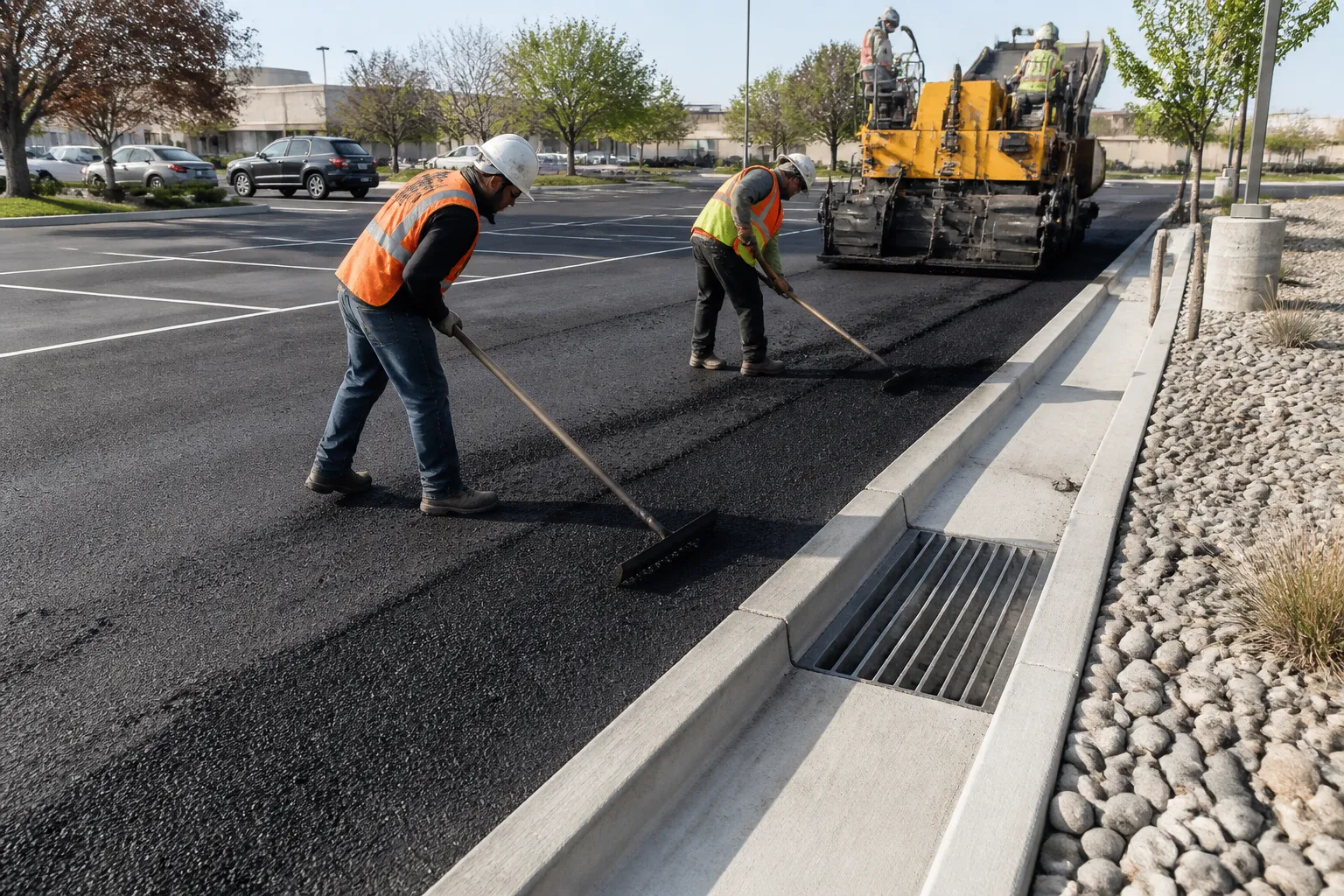
Kennewick Asphalt Paving provides Drainage Solutions in Kennewick, WA for property owners in Kennewick, WA and the Tri-Cities.
Drainage solutions are appropriate when water repeatedly stays on a driveway, parking area, access lane, or paved yard after rain, snowmelt, or irrigation. Standing water does more than make pavement inconvenient. It finds cracks, works into seams, softens support below the surface, and contributes to potholes, raveling, and settlement over time. The visible puddle is often a clue that the pavement shape, nearby grade, or drainage path needs attention.
Kennewick Asphalt Paving evaluates pavement-related drainage concerns in Kennewick and throughout the Tri-Cities. We focus on the relationship between water movement and asphalt condition, then explain whether a localized repair, grading adjustment, reconstruction area, or broader paving scope is appropriate. The goal is a practical paved surface that sheds water more effectively within the available site conditions.
Drainage work is worth discussing when the same area stays wet, deteriorates faster than surrounding pavement, or directs water toward an entrance, garage, walkway, or building. It may be part of a new paving project or a response to a low spot that developed as asphalt and underlying support changed.
Not every wet area requires the same solution. A shallow depression in otherwise sound pavement can have a different scope from a property whose grades direct water into the entire paved area.
Surface drainage work can improve the shape and continuity of asphalt so water has a more useful route away from traffic areas. It may address localized ponding, poor pavement transitions, water entering failed cracks, and asphalt that has deteriorated around an edge or downspout discharge path. It can also create a better starting condition before resurfacing or new paving.
Settlement and traffic loading can create shallow basins where water remains. Depending on the condition beneath the pavement, the area may need removal and rebuilding rather than a thin surface correction. A repair needs stable support before the final surface can hold its intended shape.
Water flowing off roofs, landscaped areas, or unpaved ground can undermine asphalt edges. Rebuilding a damaged edge may improve the paved boundary, but the source and route of water should also be considered to avoid repeating the same failure.
We begin by reviewing visible water patterns, pavement failures, surrounding elevations, and available outlets. The scope may include saw-cutting and removing failed asphalt, excavation, subgrade shaping, aggregate base correction, and hot-mix asphalt placement. For larger projects, grading creates planned cross-slope or profile changes before paving. The specific work depends on whether the issue is limited to pavement or connected to a broader site condition.
Drainage systems, underground piping, and structures outside the paved surface can be relevant to the overall problem. Where those are required, they should be coordinated with the appropriate scope rather than assumed to be part of an asphalt repair.
Residential concerns often involve driveways that puddle near a garage, water crossing a sidewalk, irrigation runoff, or a low spot at the street approach. The plan must work with existing concrete, landscaping, gates, and home elevations.
Commercial and multifamily sites may have ponding in traffic lanes, parking stalls, loading approaches, and entry drives. Vehicle movement, customer access, curbs, catch basins, striping, and keeping an active property usable can all affect the scope and sequence. Larger paved areas may need drainage evaluation as part of resurfacing or reconstruction planning.
Drainage scope is influenced by the size and depth of the affected area, source of water, existing grades, base condition, proximity to structures, equipment access, and available drainage routes. A paving contractor can improve pavement shape and rebuild failed asphalt, but cannot change property-wide runoff conditions without the space, grading, and related drainage work needed to do so.
Expected results are a more functional paved area with reduced localized ponding and a stronger surface where water-related failure has occurred. New asphalt may remain visibly darker than older pavement, and no repair can prevent future damage if water continues to enter from an unresolved source or support shifts beneath the surface.
Kennewick properties often combine irrigation, broad driveways, open lots, and changing elevations that influence water movement. We provide pavement-focused drainage assessment and asphalt work for suitable private-property projects in Kennewick, Pasco, Richland, and nearby Tri-Cities communities.
Low pavement areas, settlement, restricted outlets, and surrounding grades can all keep water from moving off the surface.
Often it can. The right approach depends on whether the pavement and support beneath it are still stable.
Water can enter weak asphalt and reduce support below it, making a damaged area more likely to deteriorate.
A localized repair may be appropriate when the concern is contained. Broad settlement or widespread failure can require a larger scope.
Resurfacing can be part of a solution only if underlying grades, drainage paths, and failed areas are addressed as needed first.
Yes. Repeated runoff or overspray can keep edges and low areas wet, contributing to surface and support problems.