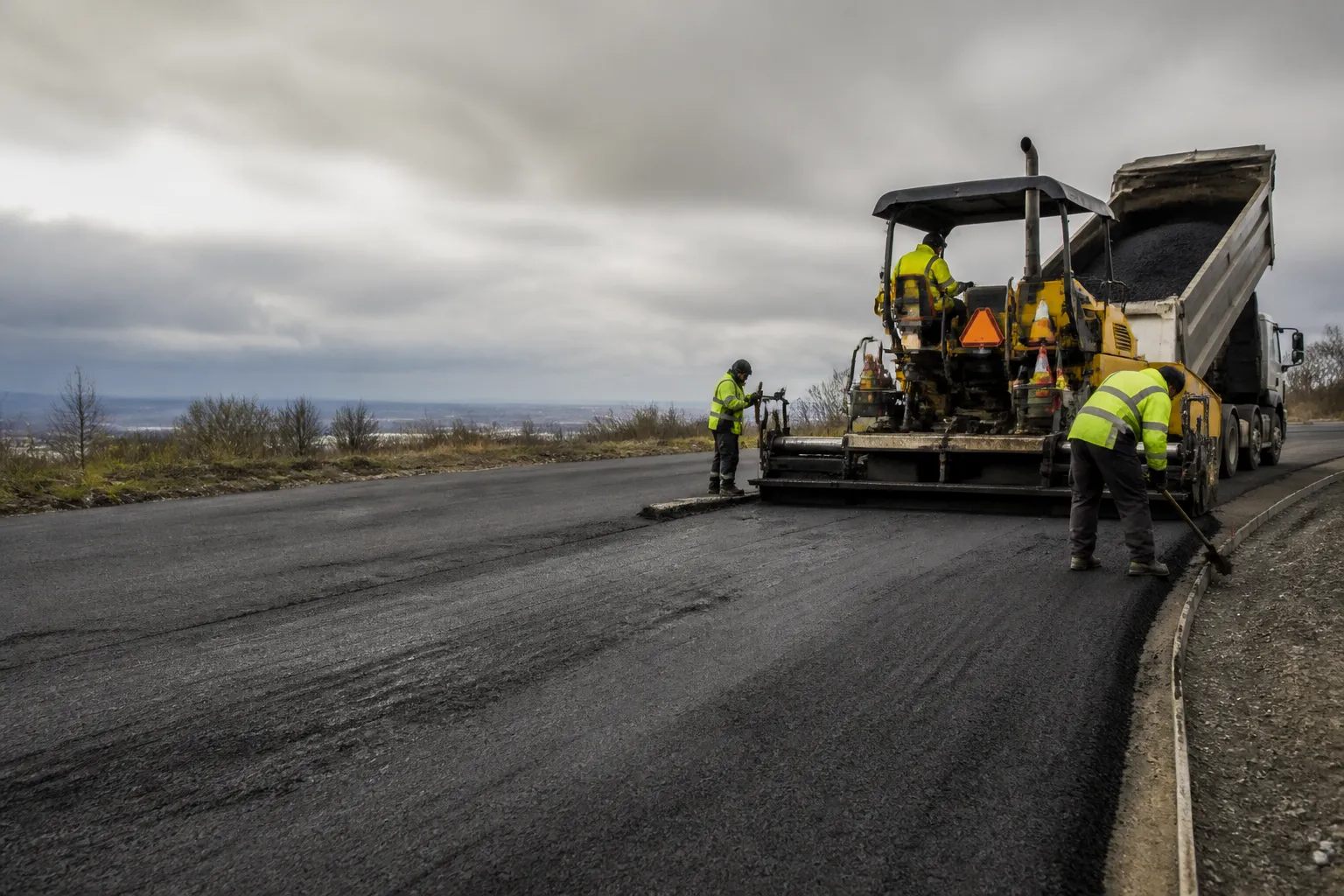
An asphalt driveway can provide many years of service when it has a stable base, good drainage, and timely maintenance. There is no responsible one-size-fits-all lifespan because driveway life depends on installation quality, water management, traffic, soil conditions, and how quickly small defects are addressed.
What determines how long a driveway lasts?
The base beneath the asphalt
Asphalt is only as dependable as the prepared base beneath it. If the base shifts, stays wet, or was not compacted properly, the surface may crack, rut, or settle. A proper evaluation looks beyond the top layer when those symptoms appear.
Drainage and water exposure
Water that lingers in low spots or enters cracks can weaken the supporting layers. Keep drainage paths clear, watch for puddling after rain, and address water that flows toward the driveway from adjacent areas. Repairing the cause is as important as repairing the visible damage.
Use and maintenance
Repeated loading from heavy vehicles, sharp turns in the same location, and neglected cracks all add stress. Regular checks allow homeowners to fill cracks, patch isolated failures, and consider sealcoating at the right time rather than waiting for widespread damage.
Warning signs to address early
- Cracks that are widening, branching, or collecting debris
- Low areas that hold water
- Loose edges, crumbling spots, or potholes
- Depressions where tires routinely travel or park
Small surface defects do not always mean the driveway needs replacement. Targeted crack filling or asphalt patching may be appropriate when the surrounding pavement is sound.
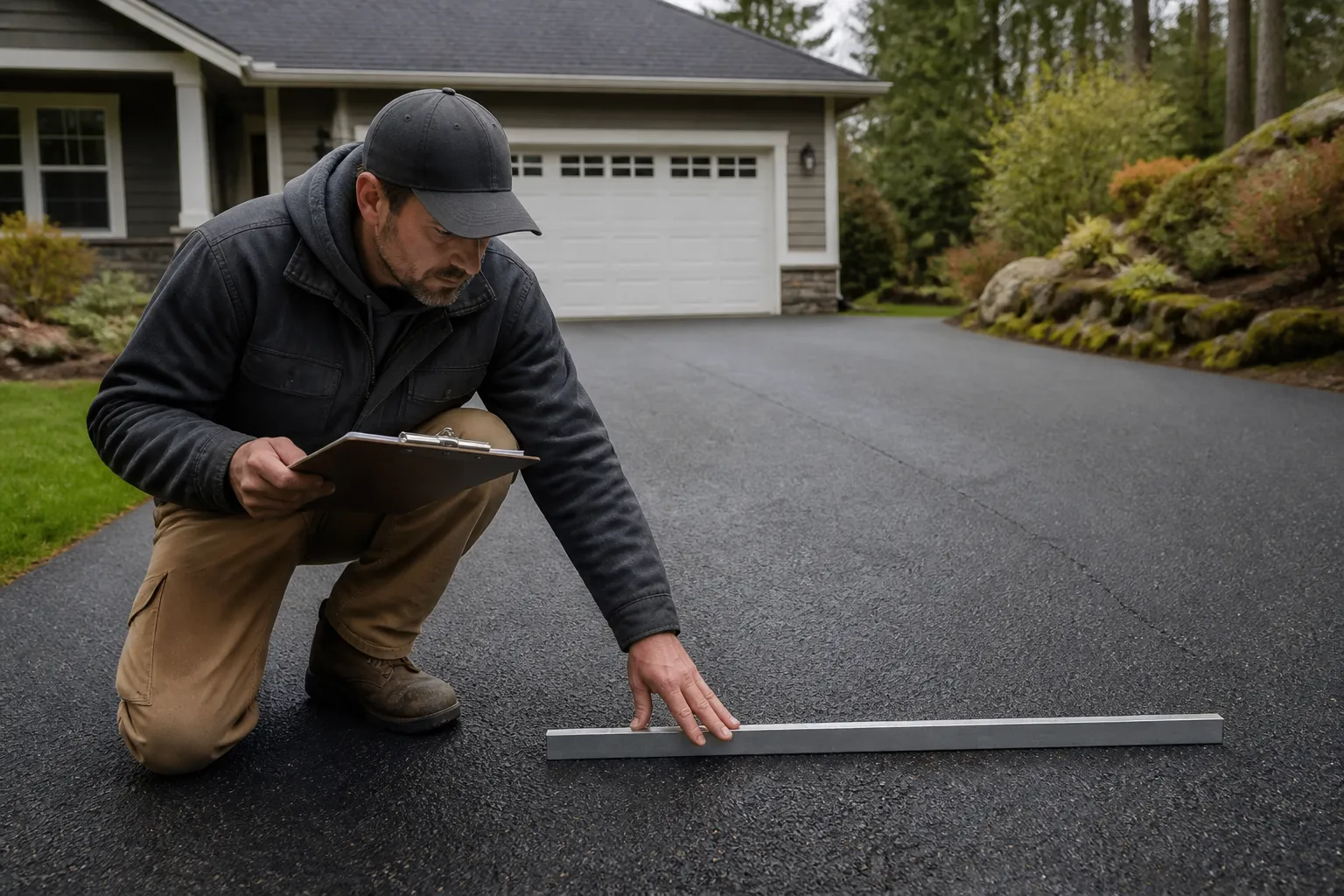
Repair, resurface, or replace?
Repairs are usually suited to isolated problems. Resurfacing can be considered when the base is stable but the surface has broad wear. Reconstruction is more likely when there is extensive movement, drainage failure, or widespread base damage. The right answer comes from the driveway’s condition, not its age alone.
FAQ
Does sealcoating repair cracks?
No. Cracks should be addressed first. Sealcoating is a maintenance treatment, not a structural repair.
Can I ignore a small crack?
It is better to monitor and address it early, particularly if it allows water into the pavement.
What the numbers say
Angi says a well-built asphalt driveway should last 25 to 30 years, depending on the asphalt, climate, base, soil, and upkeep. Angi also recommends sealcoating asphalt every two to five years.
What shortens a driveway’s life here
- Water that sits on the surface or soaks the base
- Cracks left open through freezing winter nights
- Hot summer sun drying out an unsealed surface
- Heavy trucks or equipment on a thin driveway
What extends it
- A thick, well-packed gravel base from day one
- Fill cracks every fall
- Sealcoat on a schedule
- Keep downspouts and sprinklers aimed away from the edges
When is replacement the right call?
When cracks spread across most of the surface or the base has failed, replacing the driveway usually costs less than repeated repairs.
A yearly checklist
- Spring: walk the drive for new cracks and low spots after winter.
- Summer: sealcoat if it has been a few years, on a warm, dry day.
- Fall: fill cracks and clear leaves from the edges.
- Winter: use a plastic shovel blade and avoid piling snow on the edges.
Small habits like these add years to a driveway for very little cost.
Schedule a driveway assessment
Kennewick Asphalt Paving can inspect your driveway and explain whether maintenance, repair, or resurfacing is the practical next step. Request an estimate for your Kennewick or Tri-Cities property.
Does winter salt hurt asphalt?
Salt is less harmful to asphalt than to concrete, but melting snow can still soak into cracks and refreeze. Keeping cracks filled is the best defense.
Should I seal a brand-new driveway right away?
No. New asphalt needs time to cure first. Ask your contractor when the first coat should go on.
Keep reading: see how often to sealcoat and what causes asphalt cracks. For hands-on help, visit our sealcoating and crack filling pages.