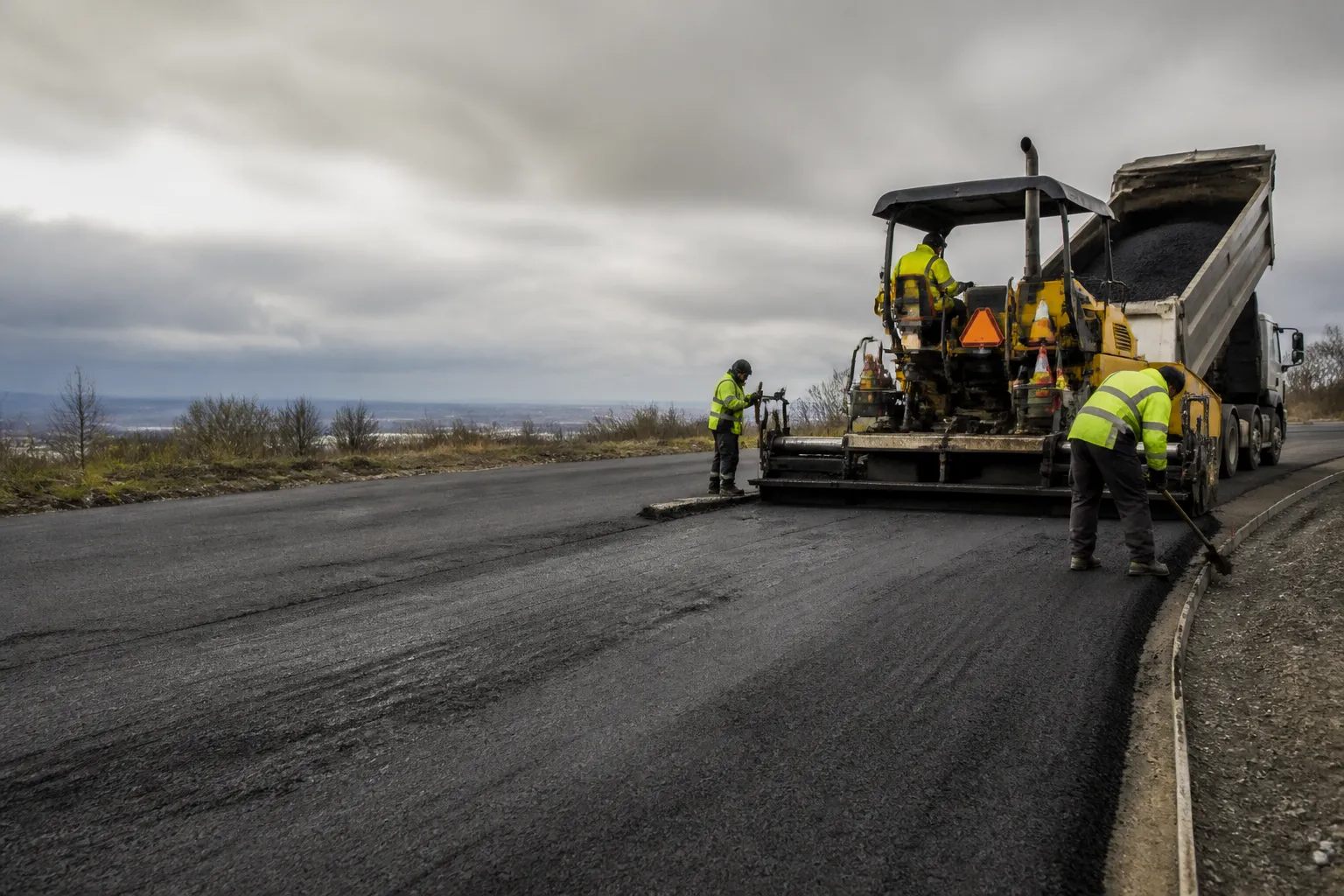
Choosing between asphalt and concrete comes down to your budget, property conditions, preferred appearance, and maintenance expectations. Neither material is automatically right for every home. In Kennewick and across the Tri-Cities, the better decision is the one that fits the driveway’s drainage, traffic, grade, and future repair needs.
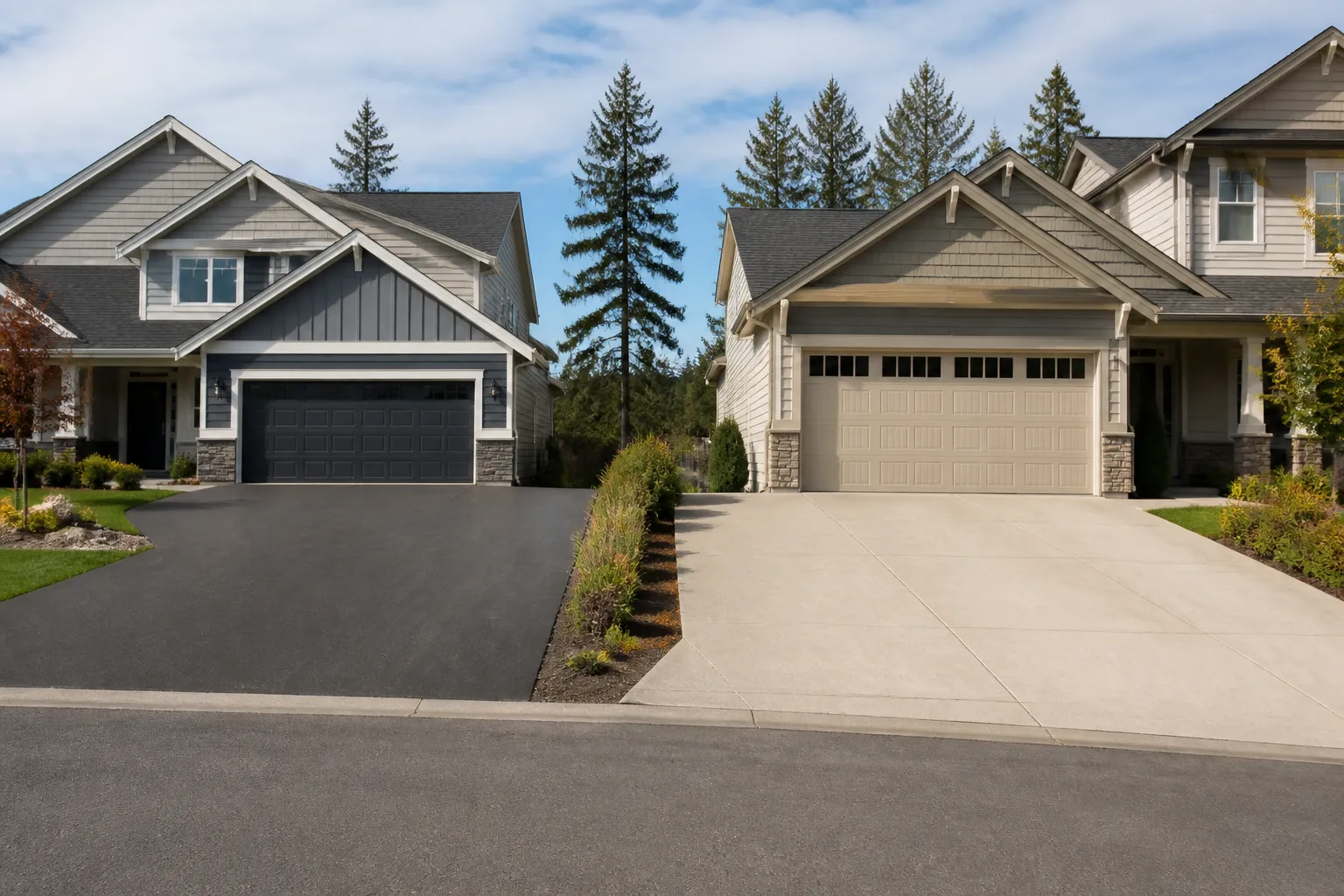
How asphalt and concrete differ
Installation and repair approach
Asphalt is placed and compacted as a flexible pavement system over a prepared base. It can be repaired in defined areas and resurfaced when the structure remains sound. Concrete is a rigid slab system. Its repair options can differ, and matching the appearance of an older slab may be more noticeable.
Appearance and upkeep
Concrete offers a light, rigid surface and can be finished in different ways. Asphalt provides a darker, uniform surface that many homeowners prefer for a traditional drive. Both need attention to drainage and surface condition. Asphalt maintenance can include crack filling and sealcoating; concrete maintenance has its own cleaning, joint, and repair considerations.
Site conditions matter
The material alone does not solve a weak base or trapped water. Before choosing either option, assess low spots, runoff near the garage, pavement edges, tree roots, and areas where vehicles turn or park repeatedly. A good plan addresses the foundation first.
When asphalt may be a practical choice
Asphalt can be a strong option for homeowners who want a smooth drive with a repairable surface and a straightforward paving process. It is especially worth considering when the project includes replacing existing asphalt or when future resurfacing may be preferable to full reconstruction.
Learn more about asphalt driveway paving and ongoing asphalt maintenance.
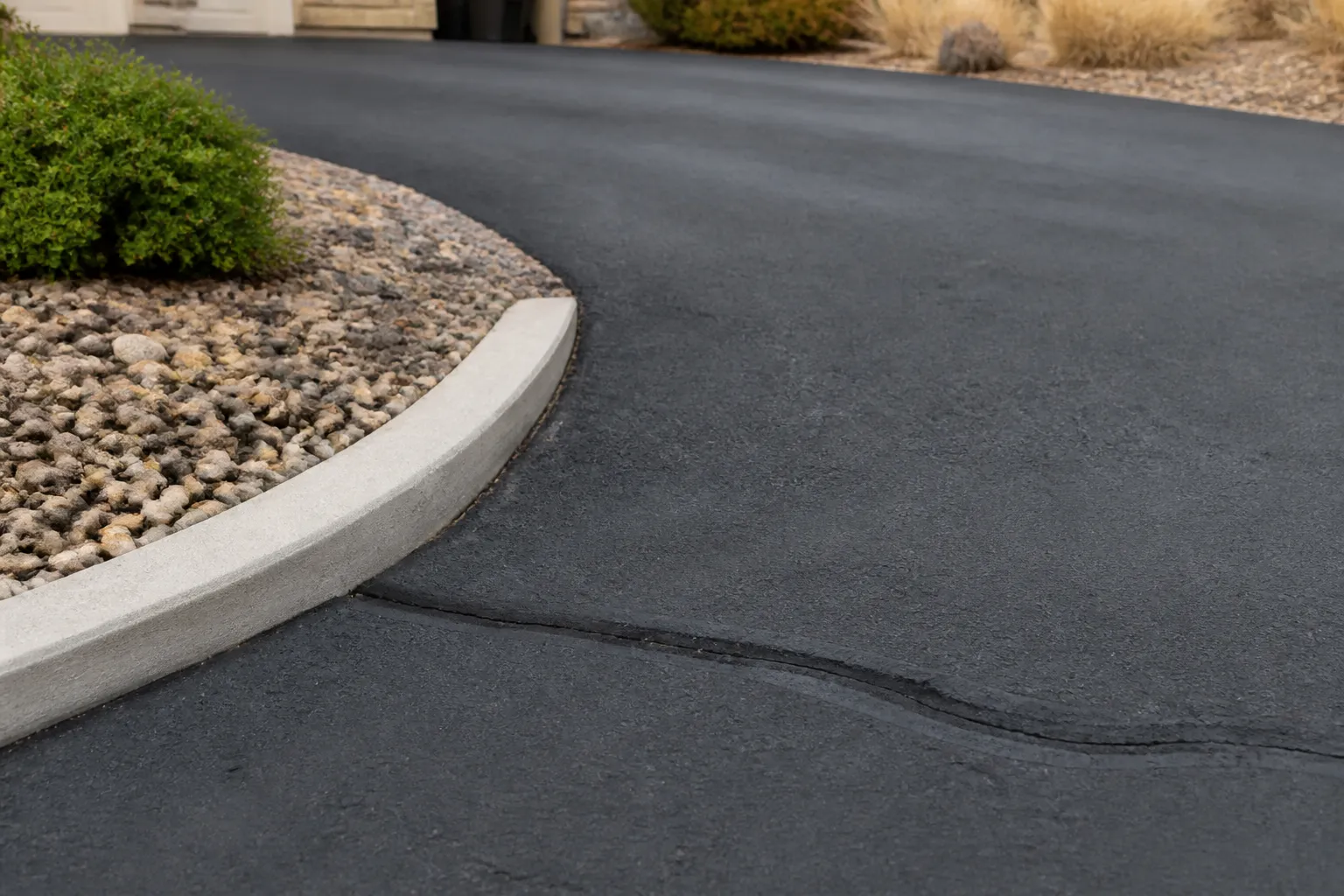
Questions that help you decide
- Is the existing base stable and draining properly?
- Will the drive see heavier vehicles, trailers, or frequent turning?
- Do you prefer a surface that can be patched and resurfaced in stages?
- What finish and maintenance approach fits the property?
Cost and lifespan
Angi puts the average asphalt driveway at $5,248. Angi lists asphalt at about $7 to $15 per square foot and says a well-built asphalt driveway can last 25 to 30 years, depending on climate, base, and upkeep. Concrete usually costs more up front and lasts longer, but it is harder to patch.
How each handles Tri-Cities weather
Hot summers can soften asphalt slightly, while cold winters can crack concrete if water gets into joints and freezes. Asphalt flexes a bit more, which can help with frost movement. Both need good drainage to last.
Upkeep
Asphalt needs sealcoating every few years and quick crack filling. Concrete needs joint care and sealing. Ask which upkeep schedule fits your time and budget.
Which is better for a long rural drive?
Asphalt or tar and chip often makes more sense for long drives, since the cost per foot is lower.
Look and resale
Asphalt gives a dark, smooth look that hides oil stains and pairs well with many home styles. Concrete is lighter and can be colored or stamped, but stains show more. Either can add curb appeal when it is built well and kept up. For resale, a driveway with no big cracks or trip edges matters more than which material it is.
Talk through the options
A site visit can clarify whether asphalt is the right fit and what preparation it needs. Contact Kennewick Asphalt Paving for a practical driveway recommendation and estimate.
Can I switch from concrete to asphalt?
Yes. The old concrete is usually broken out and hauled away, the base is checked, and new asphalt goes on top. Removal adds to the cost, so ask for it as a separate line.
Does asphalt get too hot in summer?
Dark asphalt does get warm in direct sun, but it is built to handle Tri-Cities summers. Sealcoating helps protect it from drying out.
Keep reading: see asphalt driveway costs in Kennewick and how long an asphalt driveway lasts. For hands-on help, visit our driveway paving and residential asphalt paving pages.