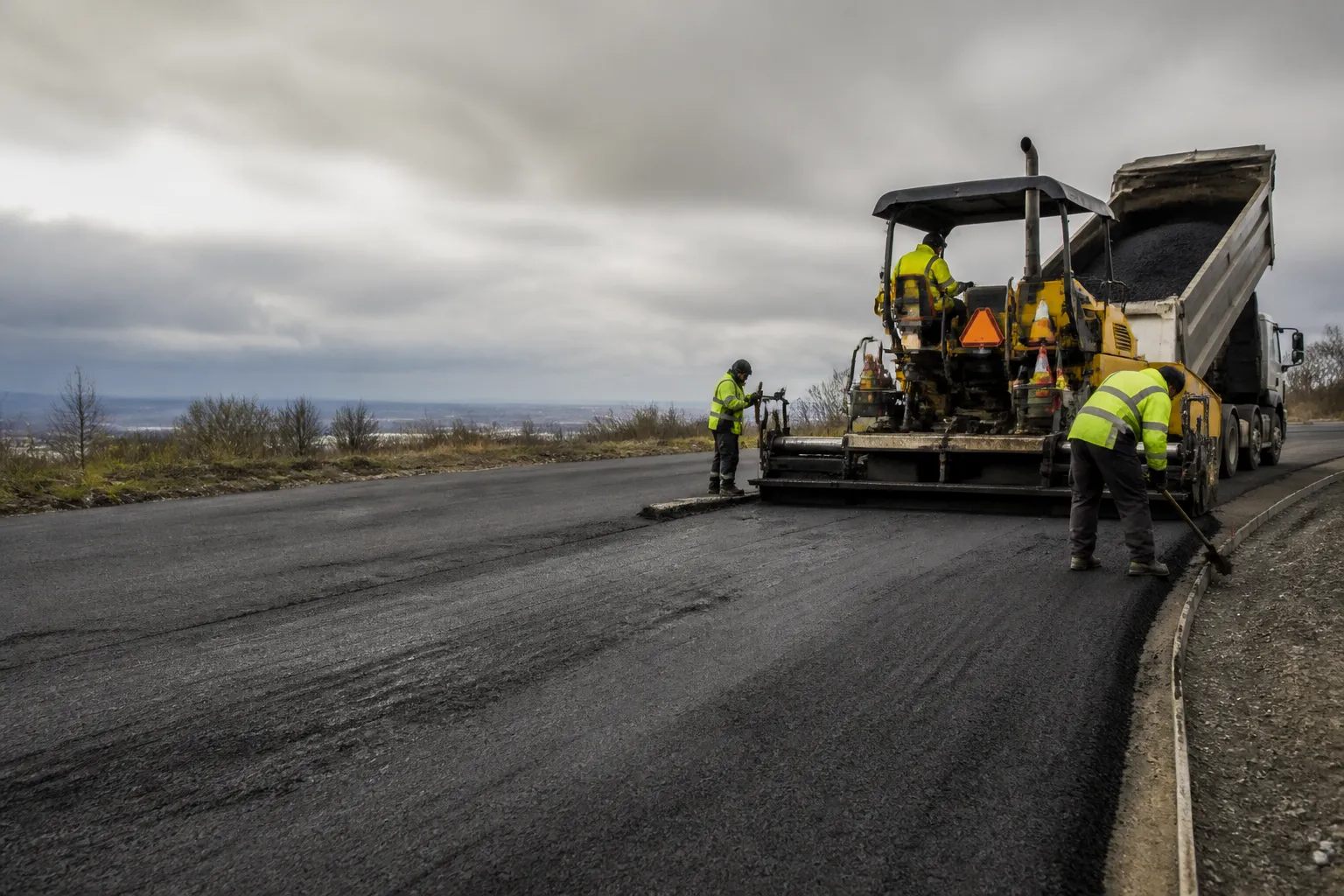
Sealcoating can be a useful part of asphalt driveway maintenance, but the right timing depends on pavement condition rather than a fixed calendar. A driveway with unresolved cracks, potholes, drainage trouble, or a weak base should be repaired before it is coated. The purpose of sealcoating is to help maintain sound asphalt, not to hide underlying failure.
What sealcoating can and cannot do
Sealcoating is a surface treatment applied to prepared asphalt. It can renew the appearance of a weathered driveway and add a protective layer to pavement that is in good condition. It does not rebuild a soft base, correct low spots, fill deep potholes, or reverse structural cracking. Understanding that distinction helps homeowners choose maintenance that matches the driveway.
Conditions that support sealcoating
A driveway may be a candidate when it has a faded, oxidized appearance but remains generally smooth and stable. Existing repairs should be sound, cracks should be addressed, and the surface should be clean. An on-site review can help distinguish normal weathering from damage that needs more substantial work first.
Conditions to repair first
Cracks that are widening or branching, potholes, broken edges, standing water, and depressions should be evaluated before coating. These symptoms can allow water to reach the supporting layers. Applying a surface treatment over active damage can make the driveway look more uniform for a time without resolving the source of the problem.
Check the driveway before planning maintenance
Walk the driveway after rain and look for puddles, loose material, and runoff flowing toward the garage or pavement edges. Note where vehicles turn, park, or place heavier loads. These high-stress areas often show early wear. Comparing photos from season to season can also reveal whether a crack or low spot is progressing.
Prepare the surface properly
Preparation affects how a maintenance treatment performs. The driveway should be cleared of dirt, leaves, oil contamination, and loose debris. Needed crack filling and patching should be completed first. The work should also be scheduled around suitable weather and the curing guidance provided for the specific product and site conditions.
Build sealcoating into a broader plan
Routine inspections, prompt crack repair, and attention to drainage can help owners make better use of sealcoating. It is one step in maintenance, alongside protecting pavement edges and avoiding repeated concentrated loads where possible. A driveway that has widespread surface wear but a stable base may need resurfacing rather than another maintenance treatment.
What sealcoating costs
Angi puts the 2026 national average at $575 to seal a driveway, with most homeowners paying $282 to $868. Materials and labor run about $1.25 to $1.50 per square foot. For large lots, Angi lists $0.14 to $0.25 per square foot.
Choosing a sealer
Angi lists asphalt emulsion as a popular mid-range choice at $0.08 to $0.12 per square foot for product. Latex or acrylic sealers cost more but resist sun and oil spills well. Coal tar is the cheapest but is banned in many places because of health and water concerns. Many sealers need warm weather to cure well, so summer is the usual season here.
Can you seal too often?
Yes. Too many coats can build up and peel. Follow a schedule based on how worn the surface looks.
Getting the most from each coat
Sealcoat works best on clean, dry pavement. Sweep and wash the surface, fill cracks, and treat oil stains first. Apply it on a warm, dry day with no rain in the forecast. Keep cars off until the crew says it has cured. A second coat on busy areas, like where cars turn, adds protection without much extra cost since the prep is already done.
Ask for a condition-based recommendation
Kennewick Asphalt Paving can help determine whether your driveway is ready for maintenance or needs repair first. Explore sealcoating services and asphalt maintenance options. Contact Kennewick Asphalt Paving for a practical driveway evaluation.
Keep reading: see how long an asphalt driveway lasts and what causes asphalt cracks. For hands-on help, visit our sealcoating and asphalt maintenance pages.