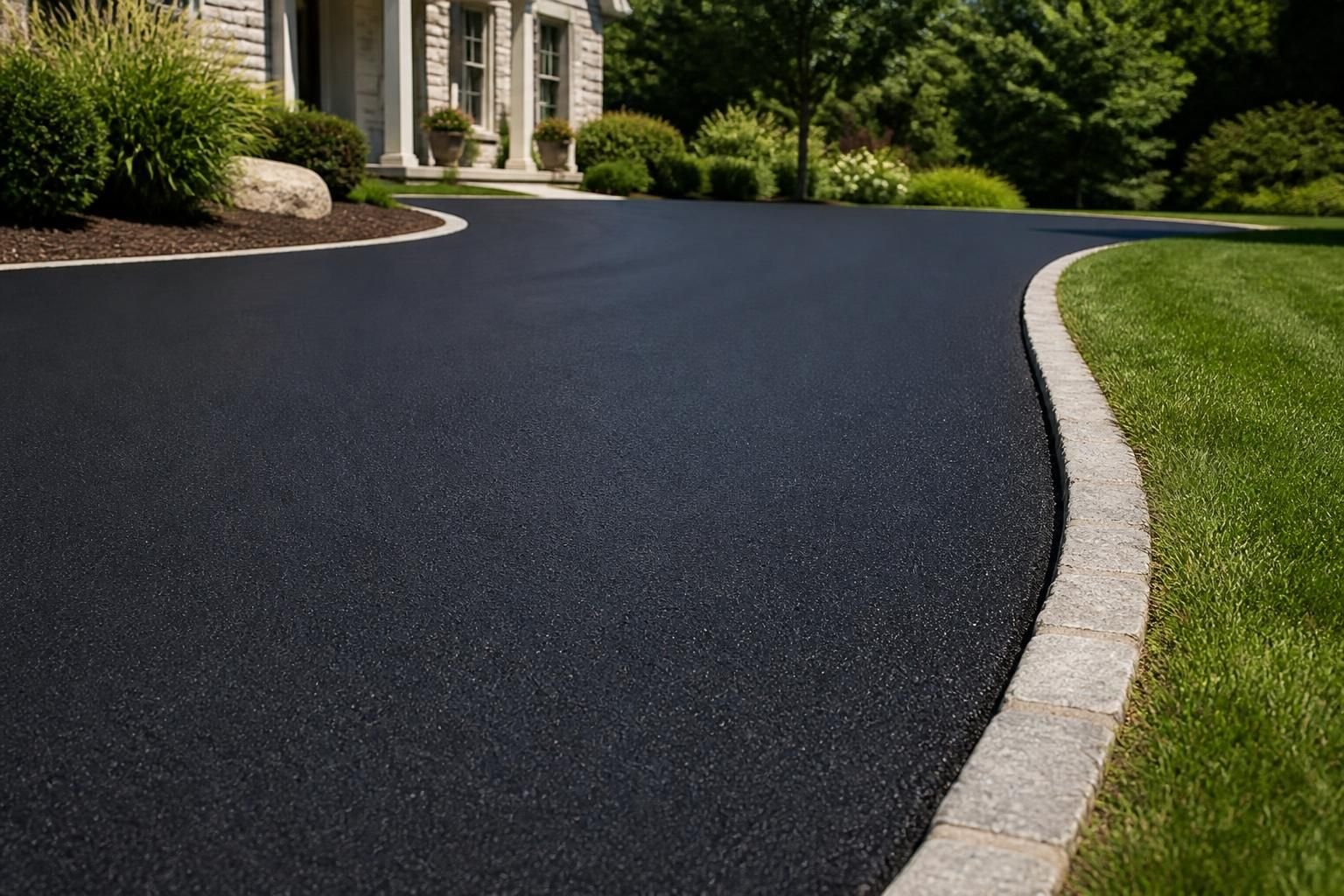
Kennewick Asphalt Paving provides Sealcoating in Kennewick, WA for property owners in Kennewick, WA and the Tri-Cities.
Sealcoating is a surface-preservation service for asphalt that is still structurally sound but showing age. It is commonly used on Kennewick driveways and parking lots that have begun to fade, look dry, or lose their uniform dark finish. It does not repair potholes or rebuild weak pavement. Instead, it protects a usable asphalt surface before routine exposure turns into more expensive repair work.
Kennewick Asphalt Paving evaluates the pavement before recommending sealcoating. That review matters because a protective coating performs best after cracks and failed sections have been addressed. If the surface is sound, sealcoating can restore a more finished appearance and help slow normal oxidation and weathering.
As asphalt ages, the binder at the top of the pavement is exposed to sun, water, vehicle traffic, and drips from parked vehicles. The surface can become gray, dry, and rougher than it was when new. Sealcoat provides a protective layer over that sound pavement, helping create a more uniform, darker surface.
The best candidates are asphalt surfaces with a stable foundation and light-to-moderate surface aging. Fine cracks should be assessed and filled where appropriate. Potholes, widespread alligator cracking, loose asphalt, and settling need deeper repair first. Applying a coating over those conditions can make a surface look darker temporarily, but it will not resolve the damaged pavement underneath.
Homeowners often choose sealcoating when a driveway has faded from black to gray, has minor surface wear, and remains smooth and stable under normal vehicles. It can be a practical maintenance step after crack filling or small repairs.
Commercial properties may use sealcoating to keep a parking surface looking orderly and ready for new line markings. The lot has to be planned around curing time and normal customer access.
Project scope is influenced by surface area, current pavement condition, the amount of preparation needed, crack work, edge detail, access, obstacles, and whether a parking lot will be restriped afterward. A small residential driveway is a different project from a business lot with traffic lanes and parking stalls. We provide a clear estimate based on the actual surface, not a generic treatment plan.
After sealcoating, sound asphalt should have a darker, more uniform appearance and a refreshed protective surface. Repairs and older patches may still show through because sealcoat is not designed to hide structural differences. The best result comes from treating the coating as part of an asphalt-care plan that includes timely crack repair and attention to drainage.
No. Potholes need patching or repair before a protective coating is considered.
Appropriate cracks should be treated before sealcoating so the surface has fewer open paths for water.
It can noticeably refresh color and uniformity, but it does not rebuild a failed base or erase old repairs.
Yes. Striping can be planned after the coating has properly cured.
That condition should be assessed for repair, patching, resurfacing, or replacement rather than coating alone.
Yes. Standing water can contribute to surface wear and should be considered as part of the pavement assessment.
Call +15094101738 to discuss sealcoating for a Kennewick driveway or parking lot.