Asphalt parking lots rarely move from perfect condition to total failure overnight. Cracks, potholes, fading, and uneven areas often appear gradually. The key is determining whether the damage is localized and repairable or whether widespread structural and drainage issues make replacement the more practical long-term option.
Start by mapping the visible damage
Walk the lot and note where defects occur, how large they are, and whether they repeat in the same locations. A few isolated potholes may call for targeted patching. Damage across drive lanes, parking stalls, and edges tells a different story. Photos taken after rain can also reveal where water is contributing to the problem.
Problems often suited to repair
Localized cracks, small potholes, broken edges, and utility-cut failures may be repaired when the surrounding pavement is sound. A proper repair addresses loose material and evaluates the supporting layers before new asphalt is placed and compacted. Early work can limit water entry and help prevent a small defect from spreading.
Warnings of structural distress
Alligator cracking, deep wheel-path ruts, soft spots, repeated failures, and broad areas of settlement may point to movement in the base below. Standing water can worsen these conditions over time. When these symptoms cover much of the lot, a surface-only repair may not offer a durable result.
Understand the middle option: resurfacing
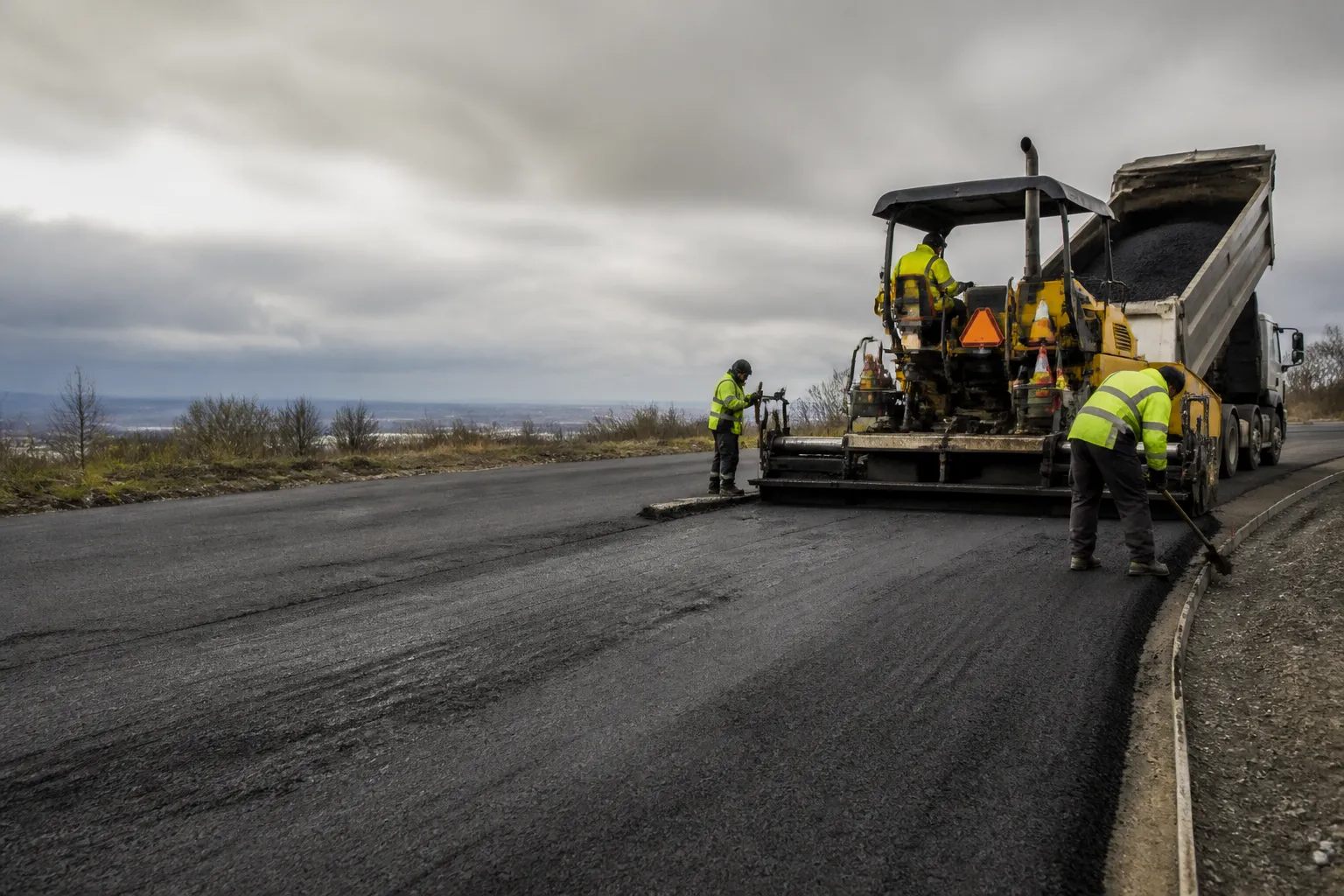
Replacement and patching are not the only choices. Resurfacing, or overlaying, may be appropriate when the base is stable but the surface has widespread weathering or moderate wear. Failed sections and drainage concerns still need to be corrected first. An overlay should follow an assessment, not replace one.
Check drainage before choosing a scope
Water that sits near drains, curb lines, entrance approaches, or low areas can weaken pavement from below. A contractor should look at grade, runoff patterns, catch basins, and edge support before recommending repair, resurfacing, or reconstruction. Fixing the source of water is as important as repairing the damaged asphalt.
Consider safety and operations
Uneven pavement and faded markings can affect more than appearance. They can complicate vehicle movement, pedestrian travel, and accessible routes. If an active property needs work, plan access, delivery routes, traffic control, and striping as part of the project instead of after repairs are complete.
Comparing costs
Angi’s 2026 data helps frame the choice:
| Item | Typical price |
|---|---|
| Repairs to a lot | $1,000 to $3,600 |
| Resurfacing | $2 to $7 per square foot |
| New paved lot | $2.50 to $7 per square foot |
| Average new lot | $75,000 |
Source: Angi. If repairs keep adding up year after year, resurfacing or replacement often costs less over time.
Questions to ask a contractor
- What share of the lot has failed, and where?
- Is water pooling anywhere, and how will you fix it?
- Can the work be phased to keep part of the lot open?
- How long should each option last with normal upkeep?
Is a full replacement ever the cheaper choice?
It can be when the base has failed across most of the lot. Patching a failed base tends to crack again quickly.
How to map the damage
Walk the lot with a printed site plan. Shade every area with cracks, potholes, or soft spots, and note where water pools. Add up the shaded area. If it is a small share of the lot, targeted repairs are usually enough. If damage covers most of it, price a resurfacing or full replacement. Bring this map to your contractor so every quote covers the same areas.
Choose the work that matches the lot
A condition-based inspection is the clearest way to decide. Parking lot repair can protect sound pavement with isolated damage, while broader distress may warrant resurfacing or reconstruction. Request an estimate from Kennewick Asphalt Paving for a practical recommendation.
Keep reading: see parking lot costs in Kennewick and how often to resurface a lot. For hands-on help, visit our parking lot repair and parking lot paving pages.